Welcome to Bio 84: Your Genes and Your Health
Welcome to Bio 84: Your Genes and Your Health
Doug Brutlag
2016
Course Summary
Analyzing your DNA can reveal a lot about your potential health and future well being. Although knowledge of your genetic frailties may suggest a predisposition to a disease, genetics alone does not seal your fate. Most common diseases such as obesity, diabetes, coronary artery disease, cancer etc. are affected by your behavior and your environment. Changing one's lifestyle can alleviate or even prevent disease. Hence, understanding genetic indicators can alert one to the importance of being vigilant about lifestyle and medical follow-ups.
In this course, we will empower you with tools to learn more about diseases, treatments and genetic tests that will help you to understand any genetic disease. The instructor will use data from his own genome to show you how you can look into your ancestry, family relationships, inherited diseases and response to drugs. You will see how knowing one's genetic profile can lead to reduced health care costs and a new approach to a confident, healthy lifestyle.
Course Requirements
No scientific or medical background is necessary for this course. For those enrolled for a grade, the grade will be determined based on attendance (9 out of 10 lectures) and a short (4-5 page) paper due at the end of the course on a topic of interest to you and relevant to genomics and medicine. For those taking the course for Credit/No Credit, credit will depend on attendance (9 out of 10 lectures) and a one short, 1-2 page, Suggested paper topics
Logistical Information
This course meets Wednesday evenings from 7:00 to 8:50 PM location to be announced upon enrollment.. You should contact Stanford Continuing Studies or the Stanford Visitors site for more information on the campus. You should access the course website (http://bio84.stanford.edu/) for all information about the course and for the course Syllabus. You may also email the instructor, Doug Brutlag, for any questions not covered by these websites.
Instructor Information
Doug Brutlag is a Professor Emeritus of Biochemistry and Medicine (by courtesy). He teaches both undergraduate and graduate courses on Genomics and Medicine and Computational Molecular Biology at Stanford. He was a co-principal investigator on the GenBank Database and founded the first biotechnology software company. He has a B.S. with honors in Biology from the California Institute of Technology and a Ph.D. with great distinction in Biochemistry from Stanford.
Doug Brutlag's Resumé
Doug Brutlag's Academic Profile
Courses Taught by Doug Brutlag
Genomics and Medicine
Genomics, Bioinformatics & Medicine
Your Genes and Your Health
Syllabus
Date |
Topic |
Videos |
Slide Link 1 |
Slide Link 2 |
Jan 13 |
Introduction: Your Genes and Your Health |
|||
Jan 20 |
Disease, Genetics and Clinical Trial Resources |
|||
Jan 27 |
The Human Genome Project |
Video |
Slides |
|
Feb 3 |
Genome Variations: SNPs and CNVs |
Video |
Slides |
|
Feb 10 |
Gene Variations Associated with Disease |
Video |
||
Feb 17 |
What You Can Learn from Personal Genomics |
Video |
||
Feb 24 |
The Potential of Genetic and Stem Cell Therapies to Treat Disease |
Video |
Slides |
|
Mar 2 |
Gene Expression and Cancer Diagnostics |
Video |
||
Mar 9 |
MicroRNA and Epigenetic Regulation of Gene Expression |
Video |
Slides |
|
Mar 16 |
The Impact of Genomics on Drug Discovery, Development and Delivery |
Slides |
Directions for Slide and Video links: To view videos you must first download the videos to your computer. Right click on the Video Link and ask to Save the file to your computer. This will dowload an MP4 file to your computer. Then double click or Open the downloaded file. Clicking on the Slides will automatically download a PDF file of the slides directly into your broswer. You should view the PDF of the slides while watching the video in another window so you can see the slides in higher resolution than visible in the video. Also the Web links in the Slide PDF file are all active so you can more easily follow along the lecture.
Suggested Final Paper Topics
Students registered for credit or a letter grade must attend at least 9 of the ten class sessions and complete one of the homework assignments listed above. For those wishing credit for the course you must submit a 1-2 page paper on topics 1-4. Please click on each of the four topics above to get directions on how to do these homework assignments and what is expected. This paper must be submitted to me by email (brutlag@stanford.edu) as an attachement (any format is ok, Word, PDF, Google Doc, HTML, RTF etc.). This homework assignment must be sent to me by the last day of class or earlier.
If you miss a class session, you may get credit for that session by watching the video link for that class above and sending me an email (brutlag@stanford.edu) with a question on the material presented in the lecture. Upon receipt of the question I will 1) answer your question and 2) give you credit for attendance at the class.
For those wishing a letter grade, you must submit a 4-5 page final paper either on one of the four propsed topics above or on a topic of your own choice concerning genomics and health. If you want to write on a topic of your own choice, you must submit that topic to me via email for my approval. For instance you may wish to write about ethical issues of genetic selection, insurability, genetic discrimination etc. However you must get my approval for your topic before you write your paper. Again you must submit the paper to my via email (brutlag@stanford.edu) with a message by the date of the last lecture in the course or earlier.
Examples of Final Papers for a Letter Grade
Familial Mediterranean Fever
Genome-Wide Association Study on Kidney Stones
Polygenicity of Bipolar Disorders and Genetic Job Discrimination
Insulin Dependent Diabetes Mellitus (Type 1 Diabetes)
To summarize, those wishing credit or a letter grade in the course must:
-
Attend nine (9) out of ten (10) classes. If you miss a class you may get credit for that class by watching the online video of that session and sending me an email message (brutlag@stanford.edu) with a question about the material presented in the lecture.
-
For credit, write a one (1) to two (2) page paper on one the four (4) topics listed in the course website. The paper is due the last day of class or earlier.
-
For a letter grade, write a four (4) to five (5) page paper which is due the last day of class or earlier..
-
All papers must be submitted to me via email (brutlag@stanford.edu), preferably as an attached document. Your attached document can be in any of these formats: Word, Pages, RTF, text, PDF, Google Doc, or HTML. The email must be dated by the last day of class or earlier.
Genetics Home Reference Handbook
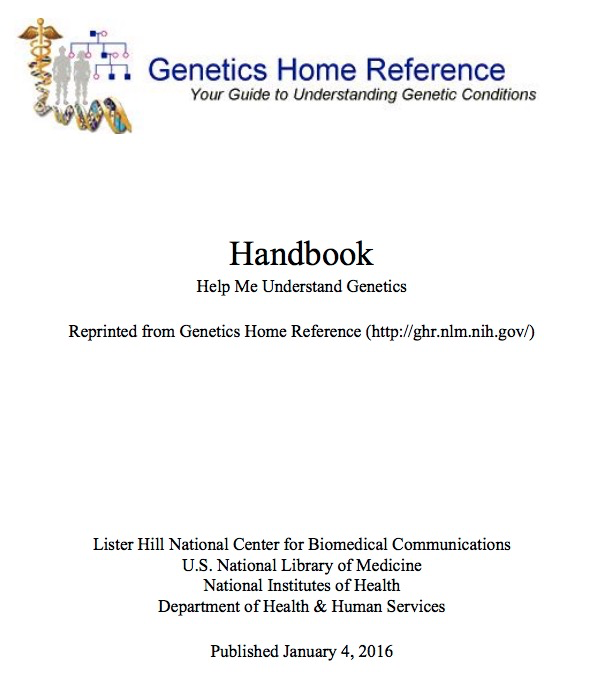
This is a short (203 page) free text book downloadable from http://ghr.nlm.nih.gov/handbook.pdf . This book is very basic and explains the entire content of this course in Scientific American style writing. I would consider this book to be THE textbook for the course. I wish everyone would read the first two chapters of this book on DNA and Chromosomes in the next two weeks. This book also contains a good glossary of biological terms.
Genetics Home Reference Handbook
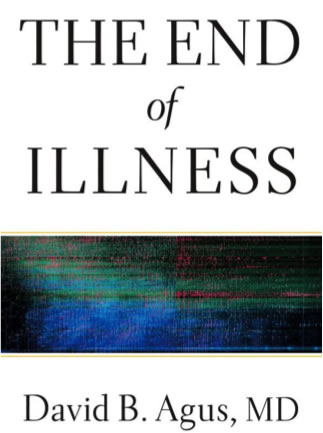
The End of Illness by David Agus
A layman's introduction to personal genomics
This book discusses the power and impact of personal genomics and proteomics from the viewpoint of a physician and a founder of a personal genomics company, Navigenics. It is written for the layman and has appeared on the New York Times best seller list.
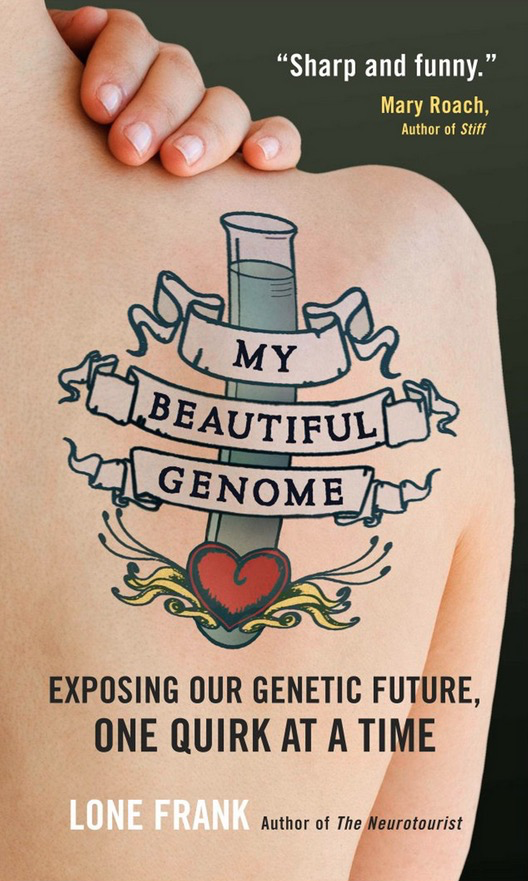
My Beautiful Genome by Lone Frank
This book is written by a neurologist turned journalist who wrote many articles on the human genome efforts for the Financial Times, Wall Street Journal, The Guardian etc. This book is based both on interviews with leaders in genomics and her own experiences interpreting her own genome in conslutation with genetic counselors.
You Tube Video of Lone Frank
Amazon
A Primer of Human Genetics by Greg Gibson
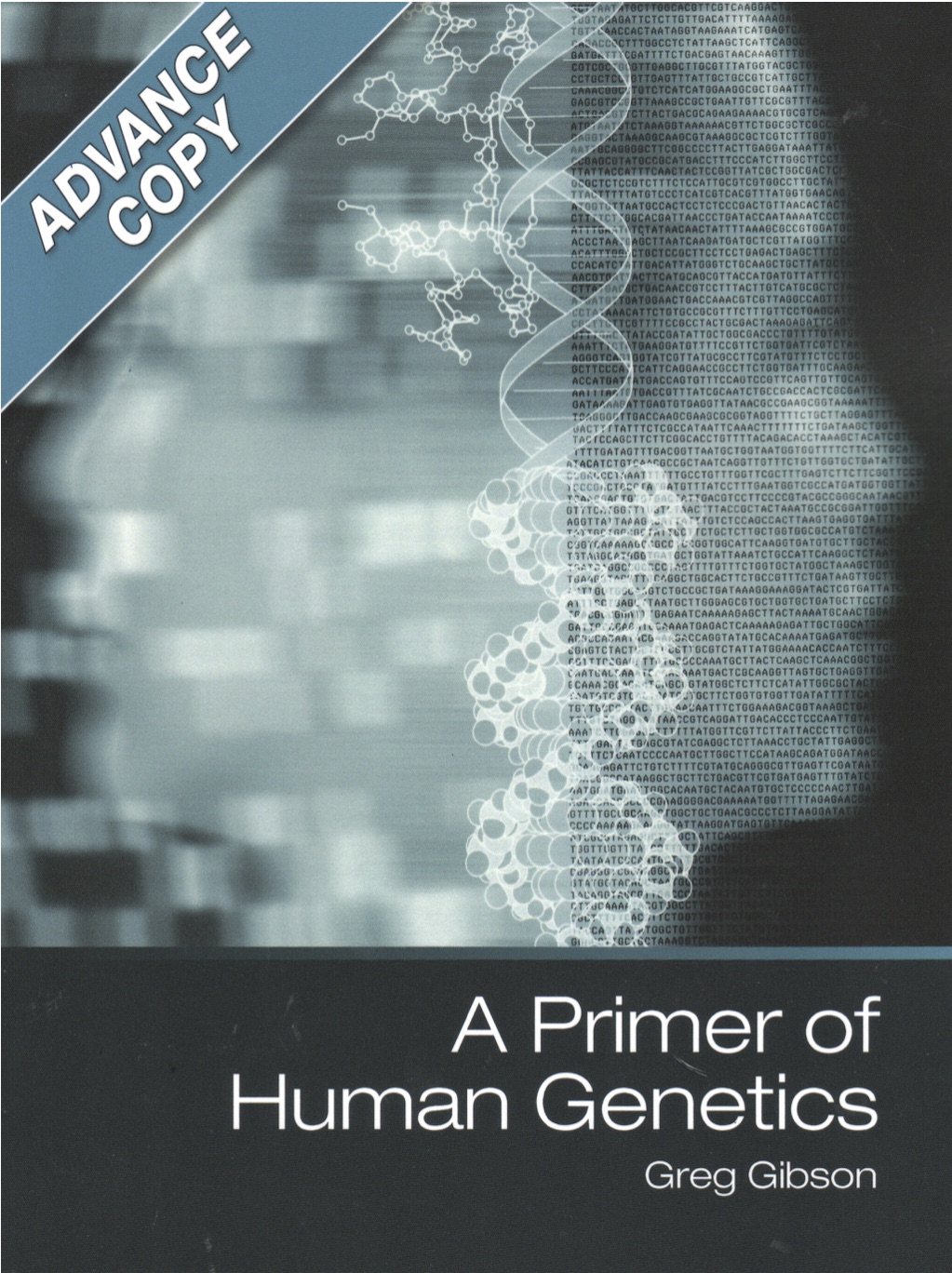
Amazon
This reference book is not required for the course but it provides an excellent introduction to basic genetics and genomics used in both medicine and research. It also goes much deeper into the technical subjects than we will in the course so it can serve as a reference guide for those wanting a deeper and more technical understanding of the material.
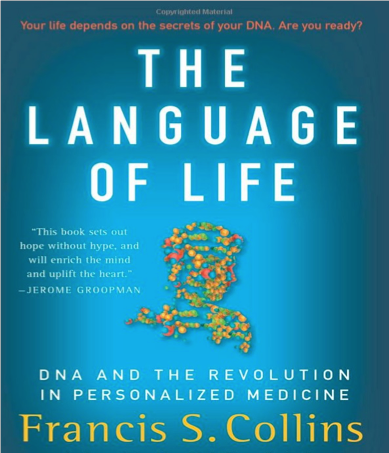
The Language of Life: DNA and the Revolution in Personalized Medicine